Can shoebills fly? How they fly, how far, and why they rarely do
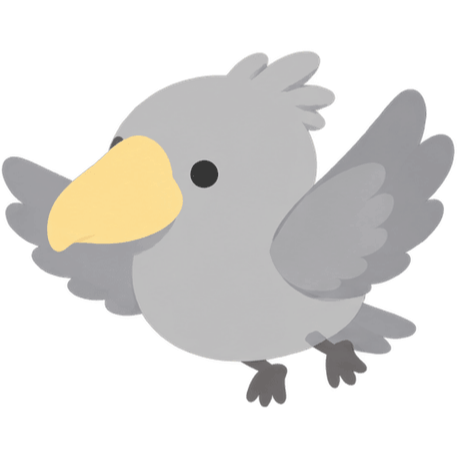
The shoebill is a bird that can really fly. But it spends only about 1% of its day in the air, which is exactly why seeing one fly is so special.
At a glance
This article walks through 12 topics, in this order.
- Can shoebills fly?
- What does a shoebill look like when it flies?
- How does shoebill flight look in numbers?
- Do shoebills fly differently from storks and herons?
- How far do shoebills fly?
- Are shoebills migratory? Do they ever fly far?
…and 6 more in the contents below.

Contents
- Can shoebills fly?
- What does a shoebill look like when it flies?
- How does shoebill flight look in numbers?
- Do shoebills fly differently from storks and herons?
- How far do shoebills fly?
- Are shoebills migratory? Do they ever fly far?
- Do shoebills perch in trees?
- When do shoebills fly?
- When can shoebill chicks fly?
- Do zoo shoebills fly?
- How can you see a shoebill fly?
- Sources
Can shoebills fly?
Yes, shoebills fly. Their wingspan (the length from one wingtip to the other) is 230 to 260 cm, and they fly slowly and steadily over the swamps.
They are famous as "the bird that doesn't move", but they have real flying power. The conservation plan of the African-Eurasian Waterbird Agreement (AEWA, an international agreement to protect waterbirds) describes the shoebill as a strong flier.
The Animal Diversity Web of the University of Michigan also describes how shoebills fly. During the day, they are often seen soaring over their territory on thermals. A thermal is a column of air that rises after the ground below has been warmed.
The photo above was taken at Lake Albert, on the border between Uganda and the Democratic Republic of the Congo. It shows a shoebill spreading its wings wide as it takes off.
 Kou
People call us the "bird that doesn't move", but that doesn't mean we can't fly. With my wings spread, I'm far wider than a grown-up with both arms stretched out.
What does a shoebill look like when it flies?
A shoebill flies with its neck pulled in. It holds its big wings flat and alternates between flapping and gliding (gliding means moving forward with the wings held out).
Pulling the neck in is what pelicans and herons do too. Storks fly with the neck stretched straight forward, so you can tell them apart by their flight. The differences are summed up in Shoebill vs. stork and heron.
The numbers come from the bird reference book *Storks, Ibises and Spoonbills of the World* (Hancock et al., 1992). According to this book, a shoebill flaps about 150 times a minute. That is about 2.5 times a second, which is considered very slow among birds.
The same book says a shoebill alternates about 7 seconds of flapping with about 7 seconds of gliding. When it climbs high, it keeps its wings flat and rides the rising air.
How does shoebill flight look in numbers?
Here are the numbers on how shoebills fly, taken from the sources.
| Item | Shoebill figure | Source |
|---|---|---|
| Wingspan (tip to tip) | 230 to 260 cm | BirdLife International and others |
| Weight | 4 to 7 kg | BirdLife International and others |
| Wingbeats | About 150 per minute | Hancock et al. (1992) |
| Flapping and gliding cycle | About 7 seconds each | Hancock et al. (1992) |
| Distance when startled into flight | Usually 100 to 500 m | Hancock et al. (1992) |
| Time spent flying | About 1% of observed time | Mullers & Amar (Zambia) |
| Usual daily movement (median) | Adults about 0.84 km, juveniles about 0.73 km | Acácio et al. (2021) |
Here is the key point. A shoebill has the power to fly far, but in real life it hardly flies at all. One study watched shoebills for more than 170 hours in the Bangweulu Wetlands of Zambia. They spent 85% of the time standing still, preening and similar things, 14% walking, and 1% flying.
Converted to one hour, 1% is about 36 seconds. Watch a wild shoebill for an hour and that is roughly how long you would see it in the air.
Do shoebills fly differently from storks and herons?
A shoebill has bigger wings than the storks, and yet it does not migrate.
| Item | Shoebill | Oriental stork (konotori, コウノトリ) | White stork (the stork of Europe) |
|---|---|---|---|
| Wingspan | 230 to 260 cm | About 200 to 220 cm | About 150 to 165 cm |
| Weight | 4 to 7 kg | 4 to 5 kg | About 2.3 to 4.4 kg |
| Neck in flight | Pulled in | Stretched out | Stretched out |
| Migration | None (moves nearby with the seasons) | Breeds in places such as northeastern China and winters in southern China | Breeds in Europe and winters in Africa |
According to Japan's Ministry of Land, Infrastructure, Transport and Tourism, the Oriental stork has a wingspan of about 200 to 220 cm and weighs 4 to 5 kg. The shoebill has wings a size larger than that.
Oriental storks and white storks, on the other hand, travel thousands of kilometers. It is an interesting contrast that the big-winged shoebill spends its whole life around the same swamps. You can read about its relatives in Shoebill relatives.
How far do shoebills fly?
A shoebill's usual movements are short. In a GPS study, 80% of days saw less than 3 km of movement. When startled into flight, they often land again after only 100 to 500 m.
In the Bangweulu Wetlands of Zambia, 11 birds were fitted with GPS devices (machines that record position). Acácio et al. published the results in Scientific Reports in 2021. Positions were recorded every hour from 6 a.m. to 6 p.m., from December 2011 to October 2018.
Most of the tagged birds were chicks about to leave the nest. The devices were put on their backs at about 84 days old. Harness included, a device weighs 80 g, or about 1.3 to 1.6% of body weight. In total, 119,321 positions were recorded.
| What was found | Adults | Juveniles |
|---|---|---|
| Longest distance moved in a day (median) | About 0.84 km | About 0.73 km |
| Months with the most movement (monthly average) | December, about 10.5 km | May, about 5.5 km |
| Months with the least movement (monthly average) | August, about 1.1 km | September, about 1.9 km |
| Yearly home range (average of the area used most) | About 1,514 km² | About 1,547 km² |
On fewer than 2 days in 10 did a bird move 3 km or more. Even so, over a year the home range spreads to about 1,500 km². That is about the size of a square 39 km on a side.
All the tracked birds stayed in the Bangweulu Wetlands all year. The study found that changes in the amount of water set off their movements. Adults tended to leave places where the water was shrinking, and juveniles tended to leave places where the water was rising.
KouFrom here on, this is Kou's guess. They usually moved less than 1 km a day, and moved when the amount of water changed. Maybe they fly only when the shallow places where fish can be caught shift along with the water level.
Are shoebills migratory? Do they ever fly far?
Shoebills are not migratory birds. But there are records of them turning up far from their usual homes, so they are thought to be capable of flying long distances.
The AEWA conservation plan (2013) says there is no evidence of regular long-distance movements. On the other hand, vagrants (birds found in places where they do not normally live) have been recorded outside the species' range. The plan cites this as evidence that shoebills can fly far.
A table in Uganda's conservation plan (2018) says that a vagrant has been recorded in the Yala Swamp in Kenya. In the Central African Republic, it is listed as an occasional visitor.
On the western side of the Sudd wetland in South Sudan, there is a report of limited movements north and south with the seasons (Guillet, 1978). The explanation given is that the places where prey fish can be caught change with the seasons.
There is one more report from South Sudan (Guillet, 1984). Even birds that feed in the same place may have nests about 100 km apart. So this is a bird that lives close to home most of the time, but can fly long distances when it needs to. The countries and swamps where they live are summed up in Shoebill habitat.
Do shoebills perch in trees?
Shoebills sometimes perch in trees. But the place where they normally rest is in grass that is lower than their own height.
Uganda's conservation plan (2018), drawing on records from older reference books, explains it this way. For resting, a shoebill chooses a patch of grass that is lower than an adult's back and easy to walk through. Sometimes it perches in a tree.
The Oriental stork in Japan is a bird that can grip branches and perch high. According to the Ministry of Land, Infrastructure, Transport and Tourism, the bird traditionally painted as a "crane on a pine tree" is in fact the Oriental stork. The shoebill also has long toes, but it more often spends its time in grass at the water's edge than up in a tree. Its feet are covered in Shoebill feet and legs.
When do shoebills fly?
Wild shoebills are known to soar on thermals during the day. A guide in Uganda says they fly around in the late morning, once it has warmed up.
This comes from an article by the Audubon Society, an American bird conservation group, which quotes a guide who led tours of the Mabamba Swamp in Uganda. There are several other reasons why a shoebill takes off.
- When changing hunting grounds (for example, when the amount of water changes)
- When startled by people or boats (they fly about 100 to 500 m and land)
- When soaring over their territory on thermals during the day
KouFrom here on, this is Kou's guess. For a bird that can weigh 7 kg, flapping nonstop may be hard work. If it waits until the ground warms and a thermal forms, it might be able to climb high without using much energy.
When can shoebill chicks fly?
Shoebill chicks become good fliers about 105 to 112 days after hatching. That is a little after they leave the nest (about 95 to 105 days).
Even after leaving the nest, they are fed by their parents for about a month. The time before they can fly is also a dangerous time for a chick.
According to the AEWA conservation plan, wildfires in the swamps during the breeding season can kill young birds that cannot fly yet. Whether a bird can fly is directly tied to whether it survives. You can read about how chicks grow in Baby shoebill and Juvenile shoebill.
Do zoo shoebills fly?
Shoebills do sometimes fly in zoos too. But there is no set time when they will, so seeing it is a stroke of luck.
The official introductions of each facility describe flying like this (as of October 2026).
| Facility | Official description |
|---|---|
| Ueno Zoo (恩賜上野動物園), Tokyo | Besides blinking and preening, it sometimes flies |
| Kobe Animal Kingdom (神戸どうぶつ王国), Hyogo | You may see a bird flying in a circle around the exhibit |
| Nasu Animal Kingdom (那須どうぶつ王国), Tochigi | Bongo has started to fly across the pond instead of using the bridge |
Kobe Animal Kingdom's "Big bill" is an exhibit that recreates a swamp. According to the official description, there is no fence or other view-blocking barrier between the exhibit and the walkway. Walking in the pond, flying in a circle, carrying nest material: visitors may see all of this up close.
On the other hand, in the sources we checked, we could not find an official document saying how zoos handle the birds' wings (that is, how far they are able to fly). Exhibits also differ in size and in how the roof is built.
You can sometimes see a shoebill spread its wings wide even when it is not flying. The structure of the wing feathers is covered in Shoebill feathers.
How can you see a shoebill fly?
To see a shoebill fly, aim for the lively morning hours and leave yourself plenty of time to wait.
The official blog of Nasu Animal Kingdom says that Bongo goes outside when the door opens in the morning and often flies to his favorite shallow nest. Knowing the busy times of day gives you more chances.
If you want to see one in the wild, Uganda's Mabamba Swamp and Murchison Falls National Park are well known. Searching is often done by boat, and if you get too close the bird may be startled and fly away.
KouFlying is over in a moment, so set your camera to burst mode. For tips on shooting, see the article on photography too.
For how to shoot them, see How to photograph a shoebill, and for why they stay still, see Why shoebills stand still. Before you go, check each facility's official information.
Sources
- Animal Diversity Web (University of Michigan): Balaeniceps rex
- Dodman (2013): International Single Species Action Plan for the Conservation of the Shoebill (AEWA Technical Series No.51)
- Acácio et al. (2021): Changes in surface water drive the movements of Shoebills (Scientific Reports)
- Values from Hancock, Kushlan & Kahl (1992), Storks, Ibises and Spoonbills of the World (checked through citations on English Wikipedia)
- Loftie-Eaton (2016): Biodiversity Observations 7.58 (cites Mullers & Amar on time use)
- Mirembe et al. (2018): Conservation plan for the shoebill in Uganda (EDGE of Existence)
- Ministry of Land, Infrastructure, Transport and Tourism, Kanto Regional Development Bureau: What kind of bird is the Oriental stork? (in Japanese)
- Audubon: Day 241: The Shoebill (2015)
- Ueno Zoo (恩賜上野動物園): Animal encyclopedia, shoebill (in Japanese)
- Kobe Animal Kingdom (神戸どうぶつ王国): Shoebill Habitat Park Big bill (in Japanese)
- Nasu Animal Kingdom (那須どうぶつ王国) official note (April 1, 2026, in Japanese)
- BirdLife International: Shoebill species factsheet
 Read next
 Life & BodyWhat is a shoebill? What family is it, and what kind of bird? Size, home and foodWhat is a shoebill? A large bird of African swamps and the only member of its family. Size next to herons and pelicans, home, food, lifespan, and where to see one.
 Life & BodyHow big is a shoebill? Height, wingspan and weight compared with people and other birdsShoebill size: 110 to 140 cm tall, a 230 to 260 cm wingspan and 4 to 7 kg. Compared with children, pelicans and herons, males vs. females, zoo records and chick growth.
 Life & BodyHow long do shoebills live? Average, longest records and why they live longShoebill lifespan: a record of 35.7 years in captivity, and Japan's Bill lived to an estimated 50 or more. Why the average is unknown, and how it compares with herons.
 Life & BodyWhat do shoebills eat? Their favorite lungfish, how they eat and how muchWhat do shoebills eat? Mostly fish: lungfish above all, plus catfish. Differences by country, how often they catch prey, how they swallow it whole, and zoo diets.
 Life & BodyWhy do shoebills stand still? Do they really not move for hours?Why do shoebills stand still? To wait for fish without being noticed. In the wild they spent 85% of their time standing, preening or sitting, and 14% walking.
 Life & BodyWhat sound does a shoebill make? What bill clattering is and meansThe best-known shoebill sound is bill clattering, often compared to a machine gun. What makes the noise, what it means, the moo-like call, chick calls and storks.