Why do shoebills stand still? Do they really not move for hours?
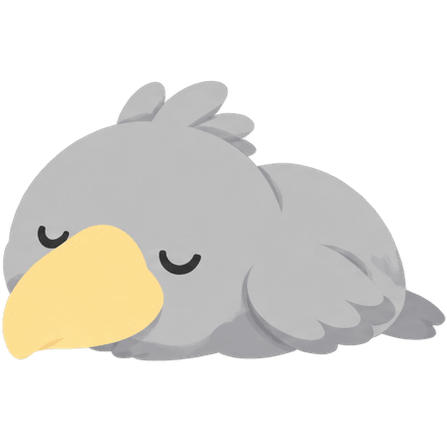
Shoebills are not standing still because they are lazy. They are waiting to hunt, so that the fish do not notice them.
At a glance
This article walks through 13 topics, in this order.
- Why do shoebills stand still?
- How little do shoebills move?
- Is it true that shoebills don't move for hours?
- Do shoebills stay still at night too?
- What does a shoebill gain by not moving?
- Where do shoebills wait without moving?
…and 7 more in the contents below.
Contents
- Why do shoebills stand still?
- How little do shoebills move?
- Is it true that shoebills don't move for hours?
- Do shoebills stay still at night too?
- What does a shoebill gain by not moving?
- Where do shoebills wait without moving?
- Do shoebills stay still while raising chicks?
- Are shoebills the only birds that hunt without moving?
- When does a shoebill that doesn't move actually move?
- Do shoebills stay still at zoos too?
- Where can you see wild shoebills that don't move?
- How can you enjoy watching a shoebill that doesn't move?
- Sources
Why do shoebills stand still?
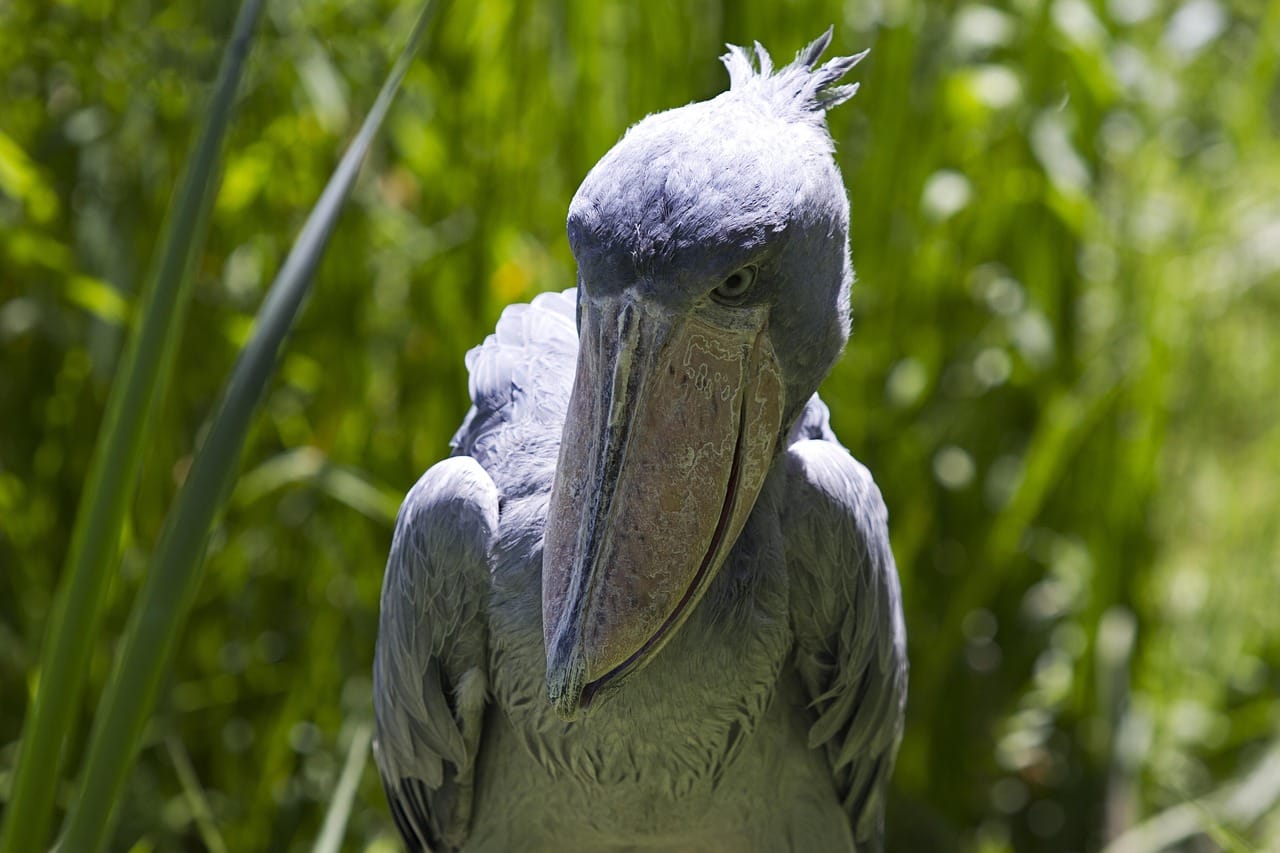
To wait for prey to come close without being noticed by the fish. The shoebill is a bird that hunts by "ambush".
Ambush hunting means not chasing prey but waiting motionless for it to come near. A 1979 study described the shoebill as a "sit-and-wait predator".
Ueno Zoo and Kobe Animal Kingdom also explain that shoebills move little because they hunt by ambush. Kobe Animal Kingdom says the bird is known as "the bird that doesn't move" because it so often freezes like a statue.
Their favorite food, the lungfish, is a fish that now and then comes to the surface to gulp air. In March 2026, the director of Nasu Animal Kingdom also explained that the bird is waiting for lungfish to come up for a breath (Shimotsuke Shimbun, a local newspaper in Tochigi). The shoebill is waiting for that single moment.
Here is the key point. For the shoebill, not moving is a hunting skill.
How little do shoebills move?
In the wild, they spent 85% of their time on behavior that takes little energy, such as standing, preening and sitting.
The study was done in the Bangweulu Wetlands in Zambia, in southern Africa. The researchers observed wild shoebills for a total of 170.1 hours (published in 2015).
| Behavior | Share of time |
|---|---|
| Standing, preening, sitting | 85% |
| Walking | 14% |
| Flying | 1% |
For example, if you watched for 12 hours, that works out to about 10 hours of standing, preening and sitting, about 1 hour 40 minutes of walking, and about 7 minutes of flying.
The same study also counted the pace of hunting.
| Hunting record | Result |
|---|---|
| Thrusting the bill in | About once every 2.2 hours on average |
| Catching prey | About one fish every 8.3 hours on average |
| Success outside the breeding season | 16 of 70 strikes |
| Success in the breeding season | 5 of 7 strikes (a short observation, so the numbers are small) |
A catch comes once every eight hours or so. You can see that they spend most of their time waiting.
Is it true that shoebills don't move for hours?
It is true that they stand still for long periods. However, within our search we could not find a figure that measured how many hours they stay still at one time.
The Dallas World Aquarium (an animal exhibit in the US) describes the shoebill as a bird that "stands motionless for long periods and then falls on its prey". A 2016 paper also says the bird is known for its statue-like behavior when hunting.
The "about once every 2.2 hours" in the Zambia study is the average gap between bill thrusts. It does not mean the bird is frozen the whole time. Walking also took up 14% of the total.
"Doesn't move for hours" is a phrase for the impression many people have had when watching. The exact time will have to wait for future observations.
Do shoebills stay still at night too?
Not much is known about what they do at night. The sources describe it differently.
- Animal Diversity Web (University of Michigan): says shoebills are often seen soaring over their territory during the day
- Dallas World Aquarium: says some are also active at night. It also says their usual movements are slow but their flying power is strong
The Zambia study also recorded birds that were followed in the daytime wetland. Keeping watch on a single bird in a dark wetland is very hard. What is known, such as resting posture, is gathered in How do shoebills sleep?.
What does a shoebill gain by not moving?
Fish are less likely to notice it, and it saves energy.
The shoebill's attack is over in an instant. According to the Dallas World Aquarium, the lunge at prey usually takes less than a second.
In return, right after the lunge it cannot attack a second time at once. According to the Animal Diversity Web of the University of Michigan, it has to get its body up and start over from a standing position.
That means it gets one chance at a time. Waiting motionless and moving only at the right moment is the shoebill's way.
Even while standing still, it is not just resting. According to the Animal Diversity Web of the University of Michigan, the bird mainly uses its eyes and ears when hunting. The bill is lowered toward the chest, which is thought to let both eyes look forward and make it easier to judge distance. The eyes are covered in Shoebill eyes: eye color and why they stare.
 Kou
From here on, this is Kou's guess. If a shoebill spends 85% of its time on near-resting behavior, it may use few calories. That may be what lets it live on one fish every eight hours or so. Not moving may be a hunting skill and also a saving skill.
Where do shoebills wait without moving?
In shallow water, or on top of floating plants. They like places where tall grass hides their bodies.
According to the Animal Diversity Web of the University of Michigan, the best hunting places are those with shallow water and tall grass. Where the water is deep, the bird stands on sturdy floating plants to hunt.
Water with little oxygen is also an important condition. When oxygen is low, fish often come up to the surface to breathe.

In the Bangweulu Wetlands, the rainy season usually runs from December to May. The water spreads widest from March to May, and begins to drop at the end of June. The look of the wetland changes a lot with the seasons.
The number of fish caught also differed with the place where the bird waited. The Zambia study compared the number of prey caught per hour.
- Flooded grassland: 0.29 fish per hour
- On floating plants: 0.10 fish per hour
That means prey was caught nearly three times as easily in flooded grassland. For more, see Shoebill hunting: waiting, lunging and success rate.
The structure of the feet, with long toes that let the bird stand on floating plants, is covered in Shoebill feet and toes. For how the swamp looks, see What is a shoebill swamp like?.
Do shoebills stay still while raising chicks?
During the nesting period, carrying water and food is added to the work of guarding the nest.
In the Bangweulu Wetlands in Zambia, a study of parental behavior at the nest was also carried out (published in 2015).
| Nesting record | Details |
|---|---|
| When the parents stay near the nest | For about 40 days after the chicks hatch, they almost never leave |
| Why they leave the nest | To fetch water to cool the chick, and materials for the nest |
| How often prey is brought to the nest | About 1.2 times a day |
| Hunting success in the breeding season | 5 of 7 (from the foraging study. The observation was short, 17.7 hours) |
How they carry water to cool the nest on hot days is covered in Shoebill cooling off.
KouFrom here on, this is Kou's guess. In the breeding season, hunting succeeded 5 times out of 7, a high rate. For the chicks, the bird may be choosing to strike only at chances that are more certain than usual. The observation time was short, so this is still only a "maybe".
Are shoebills the only birds that hunt without moving?
No, there are others. Among the herons, too, some birds stand still in the water and wait for prey.
| Bird | How it hunts |
|---|---|
| Shoebill | Stands and waits, or walks slowly. When it spots prey, it falls forward with its whole body |
| Grey heron | Stands still in shallow water and waits. In deeper places, it sometimes waits for a long time on one leg |
| Goliath heron | The world's largest heron. Stands in the water on long legs and waits for prey to come near |
| Great white pelican | Lines up in a V of up to about 20 birds in a flock, drives fish together and scoops them up |
All the descriptions come from the Animal Diversity Web of the University of Michigan. Ambush itself is not unusual among waterbirds.
What sets the shoebill apart is that it spends 85% of its time on near-resting behavior, and its big blow of falling forward with its whole body. The differences from related birds are also covered in Is a shoebill a stork? Shoebill vs stork and heron.
When does a shoebill that doesn't move actually move?
Besides hunting, it moves to greet, to cool its body and to fly.
- When it spots prey and falls forward (Shoebill hunting)
- When it clatters its bill, and when it bows in greeting (Sounds, Bowing)
- When it cools its body on a hot day by fluttering its throat (Cooling off)
- When it preens
- When it takes off (Can shoebills fly?)
In Zambia, a bath has also been recorded. Just after noon on June 28, 2015, one bird stepped into a pool. It put its head and body under the water and was reported to keep bathing for about 3 minutes.

Do shoebills stay still at zoos too?
At zoos too, they are birds that move little. But depending on the time of day and the facility, you can also see them moving a lot.
| Facility | What officials and the media say about how it looks |
|---|---|
| Ueno Zoo (恩賜上野動物園), Tokyo | Sometimes blinks and preens, and sometimes flies. In the morning after feeding, the birds are sometimes seen walking or spreading their wings |
| Kobe Animal Kingdom (神戸どうぶつ王国), Hyogo | Walks in the pond, circles the exhibit in flight, carries nest material |
| Nasu Animal Kingdom (那須どうぶつ王国), Tochigi | Bongo moves relatively often. When the door is opened in the morning, he comes out, and in the evening he waits in front of the door |
Kobe Animal Kingdom's exhibit "Big bill" opened in April 2021. It is 1,625 m² (about 6 tennis courts), with a pond and papyrus, and equipment that makes artificial rain to create a rainy season and a dry season. In a large space, the birds are also easier to see moving.
The exhibit information is as of October 2026. Ueno Zoo plans to move two birds to an off-exhibit facility for breeding. The move was planned for October 26 but has been postponed, and no new date is set. The moving day may not be announced in advance, so check the official information before you go.
KouFrom here on, this is Kou's guess. At Ueno, birds are sometimes seen moving in the morning after feeding. If their stillness in the wild is about waiting for food, then when their stomachs are full, they may have room to walk and spread their wings. Moving and not moving may also be linked to how full the stomach is.
Where can you see wild shoebills that don't move?
In the wetlands of Africa. Places such as Mabamba Swamp and Murchison Falls National Park in Uganda, and the Bangweulu Wetlands in Zambia, are well known.
Wild shoebills live only in the wetlands of central-eastern Africa. According to the International Union for Conservation of Nature (IUCN), the number of adults in the world is estimated at 3,300 to 5,300.
Uganda is estimated to have about 150 pairs.
Mabamba Swamp, about 35 km southwest of the capital, Kampala, was named an Important Bird Area (IBA) in 2001 and a Ramsar site (a wetland of international importance under the Ramsar Convention) in 2006. More than 300 species of birds live there. How to get to each place and what to see are covered in Mabamba Swamp, Murchison Falls and Bangweulu Wetlands.
How can you enjoy watching a shoebill that doesn't move?
Give yourself time, and watch from the same spot for more than 10 minutes.
Even when a bird seems frozen, you can see small movements if you look closely.
- The moment it blinks
- How it tilts its neck, and where its gaze goes
- How it preens
- How it spreads its toes, and how it shifts its position
Each bird has its own habits. If you watch thinking "it doesn't move", even the tiniest movement feels very special.
At a facility with several birds, telling them apart is part of the fun. Ueno Zoo's four birds can be told apart by the color and number of the rings on their right legs. The curve of the bill tip and the mottled pattern also differ from bird to bird.
KouA bird that isn't moving is your best chance to observe it closely. Please don't tap on the glass or call out in a loud voice!
For tips on taking photos, see How to photograph shoebills. For how they rest, see How do shoebills sleep?. For where to meet them, see Where to see shoebills in Japan.
Sources
- Mullers & Amar: study of foraging behaviour in the Bangweulu Wetlands, Zambia (Ostrich 86, 2015)
- Loftie-Eaton: observations of shoebills in the Bangweulu Wetlands (Biodiversity Observations 7.58, 2016) PDF
- Guillet, A. 1979. Aspects of the foraging behaviour of the Shoebill. Ostrich 50: 252-255 (cited in Loftie-Eaton 2016)
- Animal Diversity Web (University of Michigan): Balaeniceps rex
- Animal Diversity Web: Ardea cinerea (grey heron)
- Animal Diversity Web: Ardea goliath (Goliath heron)
- Animal Diversity Web: Pelecanus onocrotalus (great white pelican)
- Dallas World Aquarium: Shoebill stork
- Ueno Zoo (恩賜上野動物園): Animal encyclopedia, shoebill (in Japanese)
- Ueno Zoo (恩賜上野動物園): Move of two shoebills to an off-exhibit facility (2026, in Japanese)
- Kobe Animal Kingdom (神戸どうぶつ王国): Big bill, the shoebill exhibit (in Japanese)
- Kobe Animal Kingdom (神戸どうぶつ王国): press release (April 2021, in Japanese)
- Ueno Zoo (恩賜上野動物園): Shoebills, how to tell the four birds apart (in Japanese)
- Nasu Animal Kingdom (那須どうぶつ王国) official note (April 1, 2026, in Japanese)
- Shimotsuke Shimbun: "Bird that doesn't move" goes on display, shoebill Bongo comes to Nasu (March 13, 2026, in Japanese)
- Mullers & Amar: study of parental behavior at the nest and chick growth (Waterbirds 38, 2015)
- Tokyo Metropolitan Government's GO TOKYO: Ueno Zoo's shoebills (August 2026)
- IUCN Red List: Balaeniceps rex
- IUCN SSC Stork, Ibis and Spoonbill Specialist Group: shoebills and livelihoods in Uganda
- Ramsar Convention: Information Sheet (RIS) for Mabamba Bay Wetland PDF
 Read next
 Life & BodyWhat is a shoebill? What family is it, and what kind of bird? Size, home and foodWhat is a shoebill? A large bird of African swamps and the only member of its family. Size next to herons and pelicans, home, food, lifespan, and where to see one.
 Life & BodyHow big is a shoebill? Height, wingspan and weight compared with people and other birdsShoebill size: 110 to 140 cm tall, a 230 to 260 cm wingspan and 4 to 7 kg. Compared with children, pelicans and herons, males vs. females, zoo records and chick growth.
 Life & BodyHow long do shoebills live? Average, longest records and why they live longShoebill lifespan: a record of 35.7 years in captivity, and Japan's Bill lived to an estimated 50 or more. Why the average is unknown, and how it compares with herons.
 Life & BodyWhat do shoebills eat? Their favorite lungfish, how they eat and how muchWhat do shoebills eat? Mostly fish: lungfish above all, plus catfish. Differences by country, how often they catch prey, how they swallow it whole, and zoo diets.
 Life & BodyWhat sound does a shoebill make? What bill clattering is and meansThe best-known shoebill sound is bill clattering, often compared to a machine gun. What makes the noise, what it means, the moo-like call, chick calls and storks.
 Life & BodyCan shoebills fly? How they fly, how far, and why they rarely doYes, shoebills fly. A 230 to 260 cm wingspan lets them even soar on rising warm air. Wingbeat rate, GPS flight distances, chicks' first flights, and how to see one fly.